How American Diners Became Part of Everyday Life
American diners are more than places to order coffee, a burger, or a slice of pie. They are recognizable parts of the country’s cultural landscape, known for their bright signs, long counters, vinyl booths, open kitchens, and menus filled with familiar favorites.
A new museum exhibition exploring diner culture brings these details together to show how diners developed and why they remain meaningful. Through photographs, menus, furniture, signs, kitchen tools, and recorded stories, the exhibition presents the diner as both a business and a gathering place.
From Railroad Cars to Roadside Restaurants
The modern American diner has roots in the late 19th century. Early diners were often small food stands placed near busy streets, factories, and train stations. Some were built inside converted horse-drawn wagons, allowing owners to move their businesses from one location to another.
As cities expanded and transportation changed, diners became more permanent. Manufacturers began producing prefabricated diner buildings that could be delivered and installed in different locations. These structures often featured streamlined shapes, polished metal surfaces, large windows, and compact interiors.
The exhibition explains how this design made diners easy to recognize. A diner was not simply a restaurant; it had a distinct visual identity that set it apart from hotels, cafés, and traditional dining rooms.
Compact Spaces With Big Personality
Many diners were designed to make the most of limited space. A narrow building could include:
– A service counter with stools
– A small kitchen
– Booths along the walls
– Large front windows
– A menu board or display case
– Exterior lettering and bright signs
The layout encouraged quick service while also making room for conversation. Customers could sit at the counter and watch meals being prepared, or settle into a booth for a longer visit.
The Diner Menu
One of the exhibition’s central themes is the familiar diner menu. Diners became known for serving a wide variety of food throughout the day, often at affordable prices. Breakfast might include eggs, toast, pancakes, or hash browns. Lunch and dinner menus commonly featured sandwiches, soups, salads, burgers, fries, and daily specials.
Desserts also played an important role. Pie, milkshakes, cakes, and ice cream helped give diners a sense of comfort and tradition. Many diners displayed desserts where customers could see them, turning the food itself into part of the restaurant’s visual appeal.
A Menu for Many Tastes
Diner menus were designed to serve a broad range of customers. A single menu might include simple breakfast items, hearty meals, light snacks, and sweet treats. This variety helped diners appeal to workers, families, students, travelers, and late-night customers.
The exhibition includes examples of printed menus from different periods. Their prices, illustrations, typefaces, and descriptions reveal how dining habits changed over time. Some menus are practical and straightforward, while others use colorful artwork and playful language to attract attention.
Diners and Daily Routines
Diners became closely connected to everyday routines. People stopped in before work, during shopping trips, after school, or while traveling between towns. A regular customer might have a preferred seat, a usual order, and a familiar conversation with the staff.
This sense of routine helped diners become dependable community spaces. They were informal places where people could spend time without needing a special reason to visit. A customer could come in for a full meal, a cup of coffee, or simply a few quiet minutes.
The exhibition highlights these everyday experiences through oral histories and personal photographs. Visitors can hear stories about first jobs, family meals, road trips, and friendships formed around diner counters.
The People Who Made Diners Work
Diner culture was shaped not only by buildings and menus but also by the people who worked in them. Cooks, servers, owners, dishwashers, bakers, and suppliers all contributed to the diner experience.
In many diners, the open kitchen made this work visible. Customers could hear plates being prepared, see coffee poured, and watch cooks move quickly between grills and counters. This created a lively atmosphere and gave the restaurant a sense of activity.
The exhibition pays attention to these workers through uniforms, kitchen equipment, photographs, and recorded interviews. Together, these objects show the skill and effort required to keep a diner running from early morning through late evening.
Design, Signs, and Popular Images
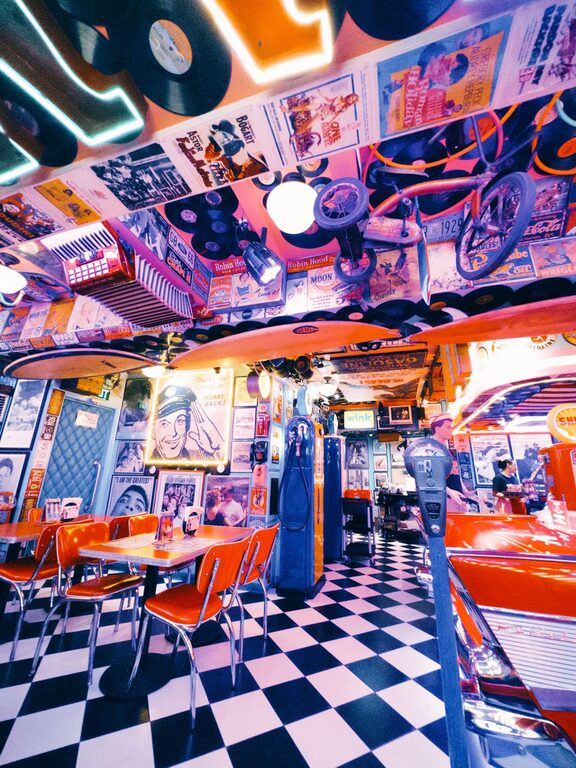
Diners are often remembered for their distinctive appearance. Stainless steel walls, curved corners, red booths, patterned floors, and neon signs helped create a style that could be recognized from a distance.
Design trends changed over the decades, but the goal remained similar: attract attention, create a welcoming space, and make the restaurant feel modern. Some diners embraced bright colors and futuristic forms, while others used wood details and traditional decorations.
Why the Look Still Matters
Diner design continues to appear in films, television programs, advertising, and photography. The familiar setting can quickly suggest a road trip, a late-night conversation, or a small-town meeting place.
The exhibition examines how these images influenced the public’s understanding of diners. It also compares popular portrayals with the ordinary reality of diner life, where most visits involved simple meals and familiar routines rather than dramatic events.
Diners on the Open Road
As automobile travel became more common, diners found new customers along highways and suburban roads. Their location, visible signs, parking areas, and fast service made them useful stops for travelers.
Roadside diners offered a sense of familiarity. Travelers could enter an unfamiliar town and still recognize the basic features of the diner experience: a large menu, a counter, a cup of coffee, and a place to rest.
Objects from this period, including roadside signs, travel photographs, and promotional materials, show how diners became part of the American road-trip tradition. They served as practical stops, but they also became destinations worth remembering.
A Living Tradition
Although dining habits have changed, diners continue to adapt. Some have updated their menus, interiors, and hours while keeping traditional favorites. Others have become known for local specialties, homemade desserts, or carefully preserved historic designs.
Modern diners may combine classic features with new approaches to service and food. This balance between tradition and change helps explain their lasting appeal. Diners can feel familiar without remaining frozen in the past.
What Visitors Can Take Away
The exhibition invites visitors to look closely at ordinary objects and places. A menu, coffee cup, booth, or kitchen timer may seem simple, but each can reveal something about work, travel, family life, design, and community.
By presenting diner culture as a broad social history, the exhibition shows why these restaurants matter. Diners are connected to architecture, food, transportation, labor, and personal memory. They reflect how people have gathered, traveled, and shared meals across generations.
For many visitors, the experience may bring back memories of a favorite local restaurant. For others, it may offer a new appreciation for the details that make diners so recognizable. In either case, the exhibition demonstrates that a small restaurant can tell a surprisingly large story.